
It’s the Tuesday before Thanksgiving, the turkey you meant to order is nowhere to be found, and your oven schedule has more conflicts than a family group chat. Thanksgiving catering from a restaurant can fix that. Most hosts don’t need to give up on the holiday, just on cooking every dish themselves. This guide helps you pick a format, set a budget, and plan the logistics people tend to forget.
What Thanksgiving catering includes
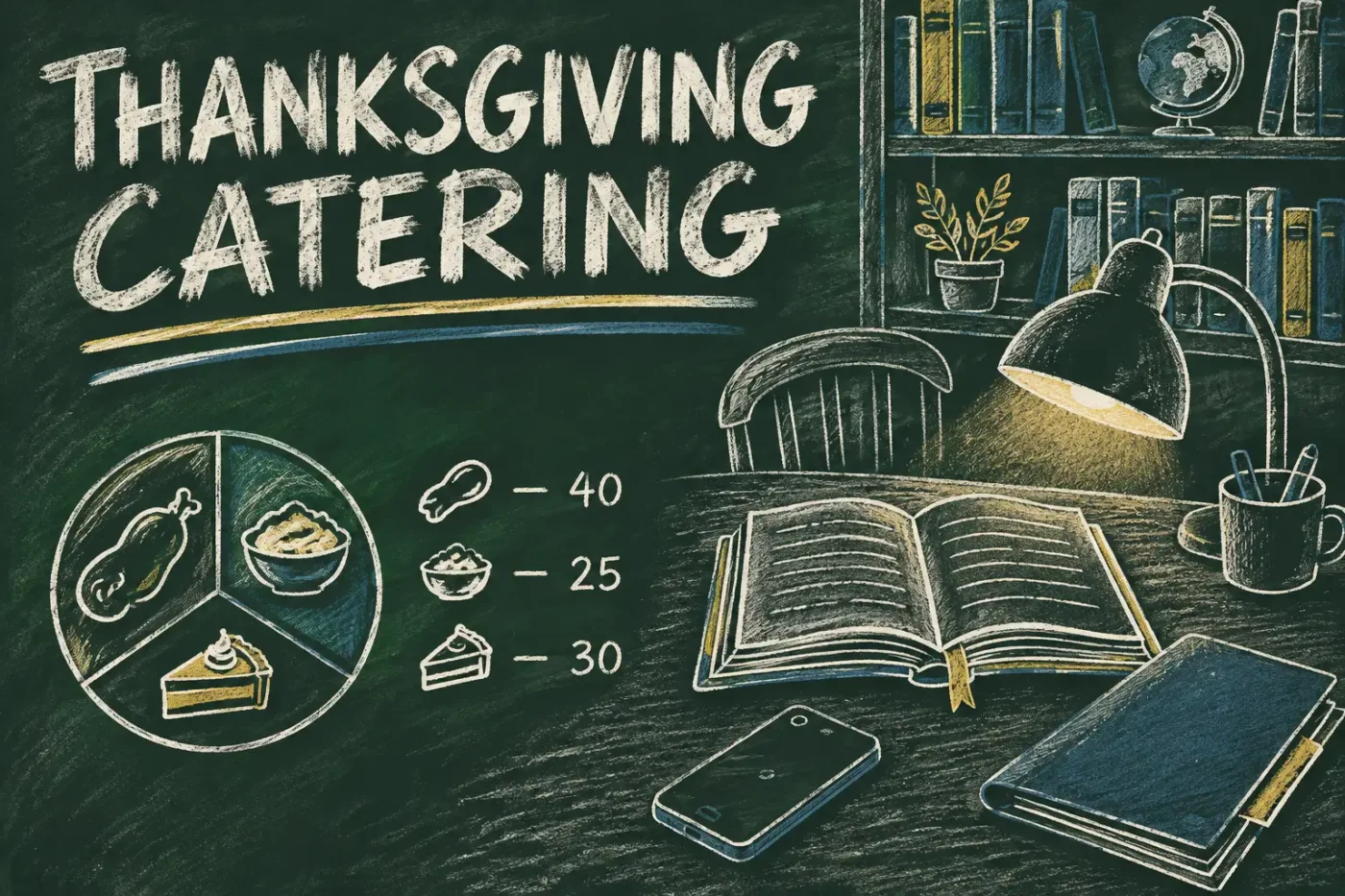
Thanksgiving catering means a restaurant or caterer prepares part or all of your holiday meal, and you collect it or have it delivered. The big difference from home cooking is who carries the workload: you trade hours of shopping, prepping, and oven juggling for a single order and a pickup window. If you’re new to feeding a crowd, our guide to dinner party hosting basics covers the planning habits that make any catered meal run smoothly. Restaurants make holiday menus in limited batches, so they set an order deadline well before Thanksgiving Day. Interest in catering tends to climb as early as October, which is why those windows close sooner than many people expect. Think of the decision as choosing among three styles: a fully catered feast, a hybrid where you cater the heavy lifting and cook the signatures yourself, or individually packaged meals.
Full-service, drop-off, and pickup options
Pickup is the most common option and usually the cheapest, but you need a clean car and a fixed time slot. Drop-off delivery brings the food to your door within a set window, so check whether that window fits your schedule. Full-service catering, where staff set up or serve on site, costs more and is usually a better fit for larger gatherings. Individually packaged meals suit small households, remote relatives, or guests who want to eat on their own schedule.
Dishes in a typical holiday package
Most packages cover roast turkey, stuffing, gravy, mashed potatoes, cranberry sauce, a vegetable side, rolls, and pie. Some providers sell set family-style packages, while others sell à la carte trays by the dish. Food usually arrives in one of two forms: fully cooked, ready-to-serve trays, or chilled, packaged items with reheating instructions. That distinction matters because it decides how much oven and fridge space you need on the day.
Estimating portions and budget for your guest count
Start with a real headcount, then decide how many leftovers you want. A host who wants turkey sandwiches for three days should order more than one who wants a clean fridge by Sunday. Dietary needs also shape the order, since a few vegetarian or gluten-free guests may call for a separate tray. Whether you pick a set package or build your own from à la carte trays depends mostly on these three factors: headcount, dietary needs, and leftover goals.
Per-person serving guidelines
A common rule of thumb is about one pound of bone-in turkey per person, or roughly half a pound if it’s boneless. For sides, plan on a generous half cup to one cup per guest for each dish, and fewer dishes means bigger portions of each. For dessert, one slice per person works, but add an extra pie if you have a crowd that likes seconds. Ask the caterer how they size their trays, since “serves 10” can mean different things from one kitchen to the next.
How to compare catering quotes
Prices vary widely by region, restaurant type, and service level, so no single number applies everywhere. The most reliable way to judge cost is to request written quotes from two or three providers for the same guest count and the same dishes. Lay the quotes side by side and compare them line by line: portion sizes per tray, what the base package includes, and what counts as an add-on. Delivery fees, setup charges, and extras like additional gravy or rolls can change a total quickly, so confirm each one is itemized. Set a ceiling before you start browsing, and decide in advance which items you’d drop first if the quote runs high.
Choosing a caterer and booking before the rush
Booking early is the single biggest factor in getting your preferred pickup or delivery time. Look for a clear menu, posted deadlines, and a straightforward way to confirm your order in writing. If a restaurant you like has already closed orders, ask whether they keep a waitlist for cancellations. Hosts who also cook a second holiday meal can borrow ideas from our Christmas Eve dinner menus when deciding which dishes are worth ordering versus making.
Questions to ask before placing a deposit
- What is the order cutoff, and what is the cancellation or change policy?
- Is the food fully cooked and ready to serve, or chilled with reheating instructions?
- What are the pickup or delivery windows, and can I choose my time?
- Do trays come in disposable pans, and are serving utensils included?
- How do you handle allergies and cross-contact in the kitchen?
It also helps to ask whether written reheating and holding instructions come with the order. For a broader look at menu structure and pricing, see our notes on catering a holiday party.
Customizing with seasonal sides, desserts, and wine
A catered base doesn’t have to look like everyone else’s table. Many hosts now treat Thanksgiving as a shared-effort meal, mixing restaurant-prepared dishes with a few homemade favorites to cut stress without losing the personal touch. A practical hybrid is to order the time-intensive items such as turkey, stuffing, and gravy, then cook one or two family-signature dishes or desserts yourself. That keeps your grandmother’s sweet potato casserole in the spread while freeing your oven for the main event. Seasonal additions like roasted squash, a fresh cranberry relish, or an apple-based dessert help the table feel current.
Handling dietary restrictions and allergies
Ask early whether the restaurant can make vegetarian, gluten-free, or other adjusted dishes, since special requests are easier to handle before the batch cooking begins. Be specific about allergies and ask how the kitchen prevents cross-contact, rather than assuming a dish is safe. If a full accommodation isn’t possible, a small homemade side for the affected guest is a simple backup. Label each dish at the table so guests can serve themselves with confidence.
Matching wines to a traditional spread
Thanksgiving plates mix sweet, savory, and rich flavors, so versatile wines work best. A dry or off-dry white such as Riesling or an unoaked Chardonnay handles turkey and creamy sides well. For reds, lighter styles like Pinot Noir pair easily with gravy and cranberry without overpowering the meal. A dry sparkling wine is a good all-purpose choice for the toast and the appetizer hour. Ask your caterer if they sell wine or have pairing suggestions for their menu.
Serving day logistics
Plan the day backward from the time you want to sit down. Confirm your pickup or delivery window, clear fridge shelves the night before, and map out which dishes need the oven, the stovetop, or the microwave. If your order is chilled and packaged, oven space becomes your biggest constraint, so write a simple schedule with start times for each dish. Fully cooked trays need less oven time but still need a way to stay warm until serving.
Reheating and holding food safely
Follow the caterer’s written instructions first, since they know how their dishes were packed. As a general guide, reheat chilled items in a covered dish at a moderate oven temperature, adding a splash of broth or water to turkey, stuffing, and mashed potatoes so they don’t dry out. Reheat food until it is steaming hot all the way through, and use a food thermometer to confirm it reaches 165°F. Once heated, keep dishes warm in a low oven, a slow cooker, or a chafing dish, and don’t leave perishable food out for more than two hours.
Adding homemade touches to the meal
The easiest way to make catered food feel like yours is to serve it on your own dishes instead of the delivery trays. Transfer each item to a platter or bowl, and finish with a fresh garnish like chopped herbs on the potatoes or toasted nuts on the green beans. Warm the rolls yourself, simmer a pot of gravy with a little extra pepper, or bake one family recipe so the house smells like the holiday. A simple centerpiece and good lighting do more for the table than extra dishes ever will.
Final checklist for a smooth catered Thanksgiving
Thanksgiving catering works best when you choose a format first, whether that’s a full feast, a hybrid with a few homemade signatures, or individually packaged meals. Then lock in your headcount, confirm the order cutoff and pickup or delivery window, and plan your oven and fridge space for the day. Placing your order early and reading the reheating instructions ahead of time will do more to keep the meal calm than any last-minute fix.